
When you want to serve a steakhouse celebration dinner at home without tending an outdoor grill, nothing rivals Cast-Iron Pan-Seared Ribeye Steaks with Garlic Thyme Compound Butter. Using a heavy 12-inch cast-iron skillet, high-smoke-point avocado oil, and the classic French arroser butter-basting method, you can build a mahogany edge-to-edge crust around a juicy, ruby-pink medium-rare center in under 15 minutes.
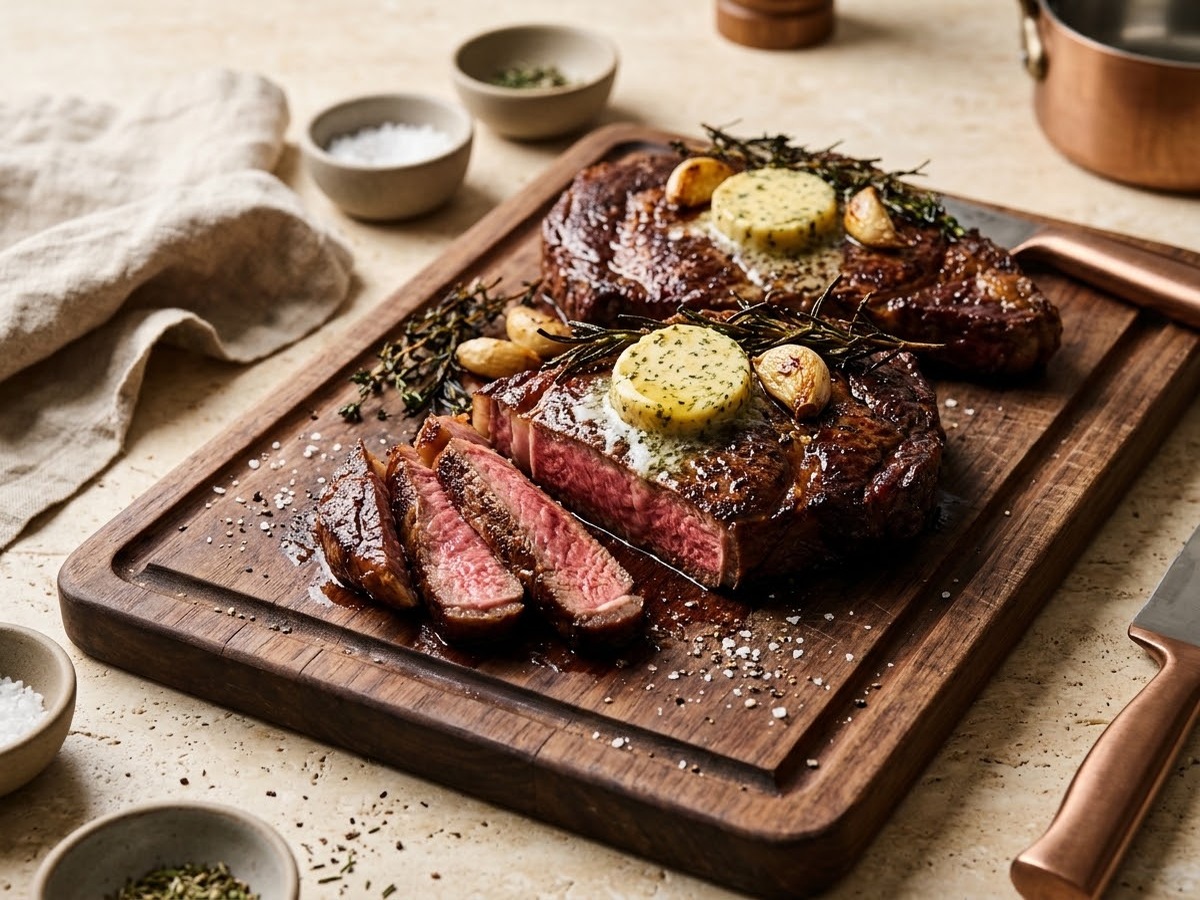
Ribeye is the undisputed king of skillet steaks because of its abundant intramuscular marbling and tender spinalis dorsi cap. As a thick-cut cast iron ribeye steak hits preheated cast iron, that rich marbling renders and bastes the beef fibers from within while the flat iron surface delivers uninterrupted thermal contact.
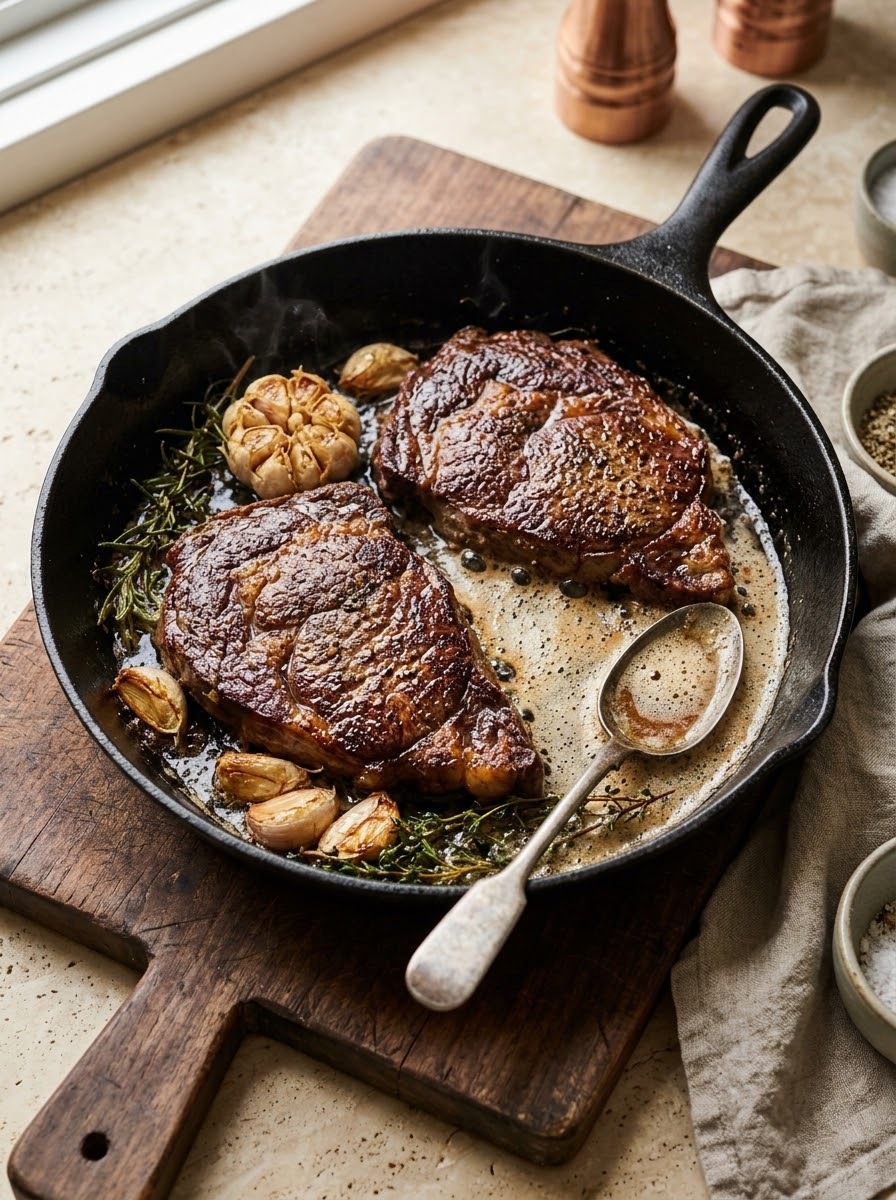
Once both sides develop a deep golden-brown sear, we drop whole smashed garlic cloves, fresh thyme, and rosemary sprigs into foaming unsalted butter, tilt the skillet slightly, and spoon that nutty, herb-infused butter continuously over the top of each steak.
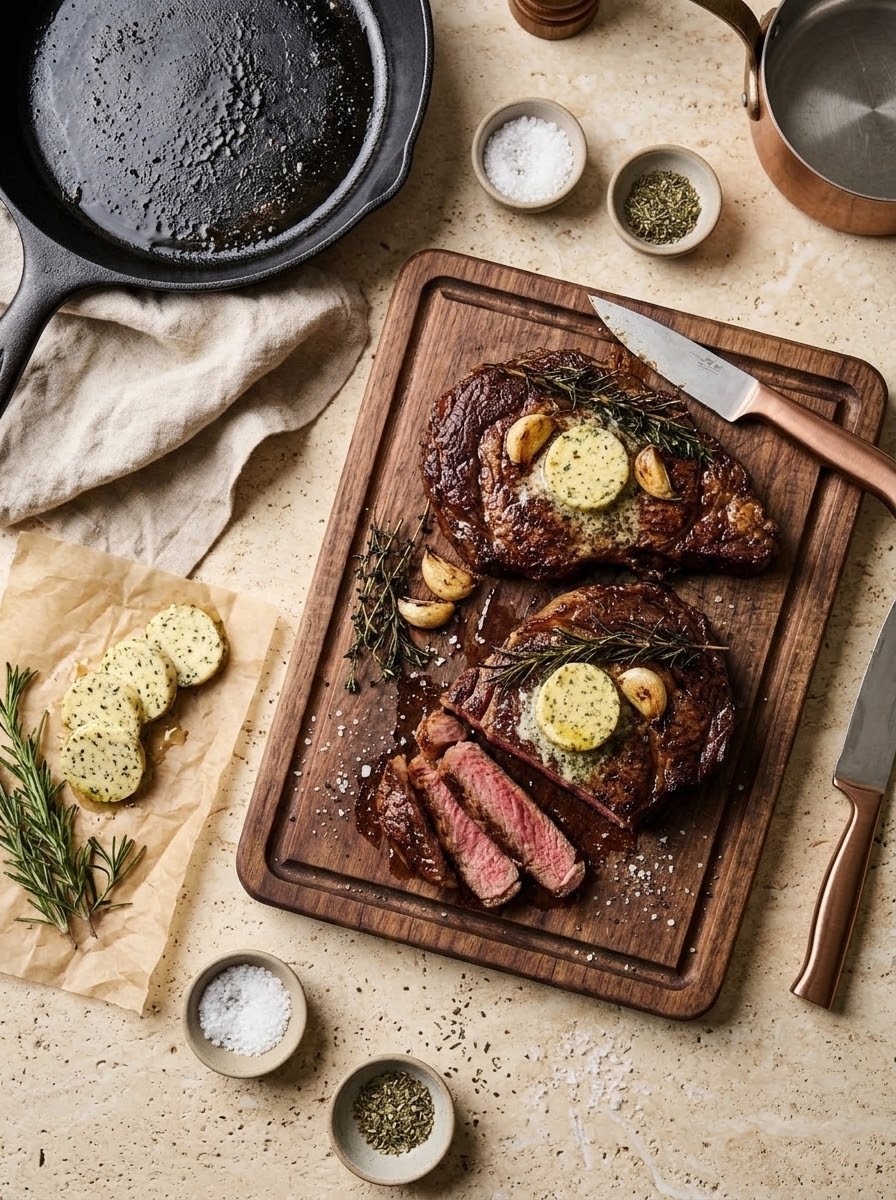
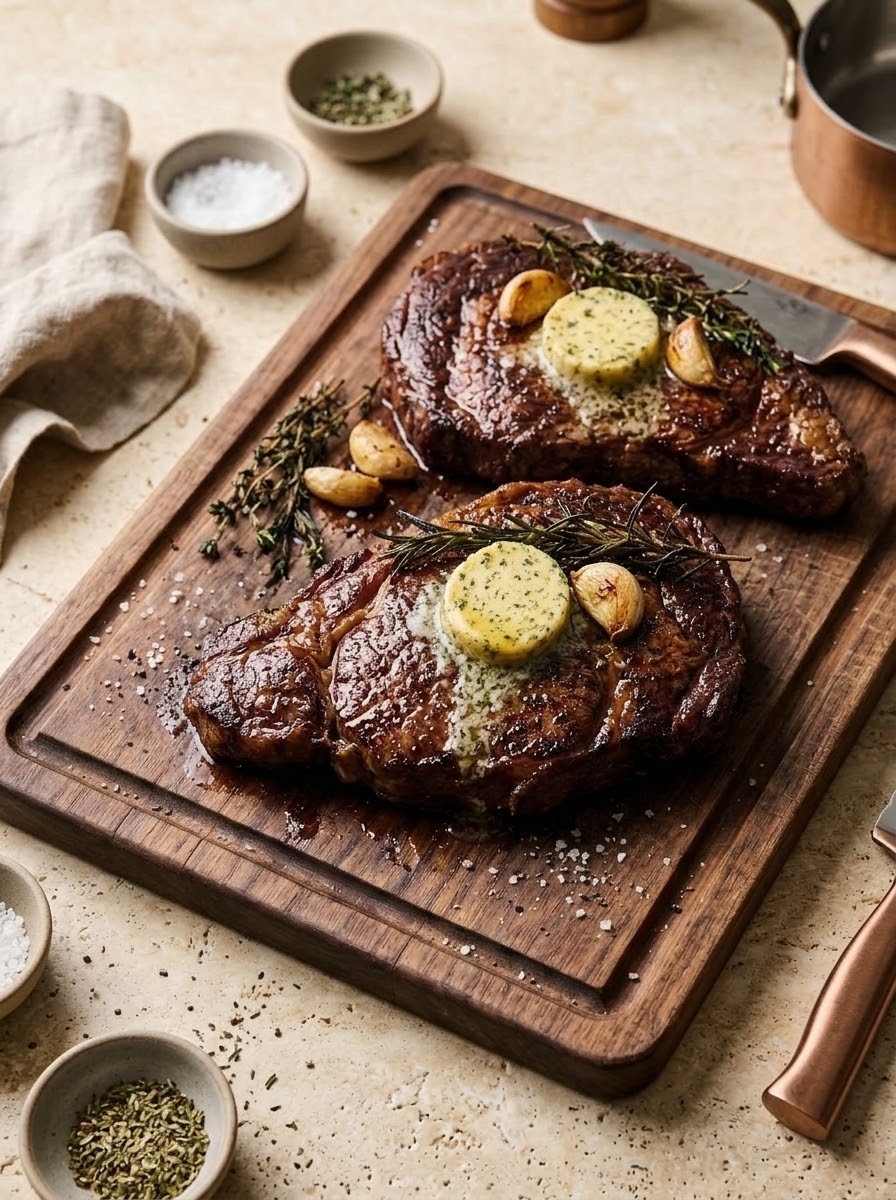
While the steaks rest on a warm walnut carving board, a chilled medallion of homemade garlic-herb compound butter melts lazily across the crust, mingling with the savory beef juices to create an instant steakhouse pan sauce.
In This Recipe • Quick IndexIndex
- True Steakhouse Mahogany Crust: Heavy cast iron retains intense heat when cold meat touches the surface, creating an instant Maillard sear without steaming.
- French Arroser Butter Basting: Spoon-basting foaming garlic-thyme butter over the steak cooks the center evenly while infusing the crust with toasted milk solids.
- Make-Ahead Compound Butter Medallions: A log of whipped unsalted butter mixed with minced garlic, thyme, rosemary, and flaky sea salt can be rolled days ahead.
- 15-Minute Holiday Main Course: Ideal for an intimate Christmas Eve, anniversary dinner, or festive weekend gathering when you don’t need a whole roast.
How to Choose the Best Ribeye Steaks for Cast-Iron Searing
Thickness matters more than weight when searing in cast iron. Thin ¾-inch supermarket steaks overcook to gray medium-well in the center before the exterior has time to develop a proper crust.
Always ask your halal butcher for 1 ¼-inch to 1 ½-inch thick boneless ribeye steaks (about 12 to 14 ounces / 340 to 400g each) with fine white flecks of marbling distributed evenly throughout the central eye and a generous outer cap. If you see a large pocket of hard white fat between the eye and the cap, don’t trim it off—searing the steak upright on its fat edge for 45 seconds renders it into crisp, buttery gold.
Ingredients & Smart Substitutions
Because the ingredient list is minimalist, use coarse kosher salt for the dry crust, neutral high-heat oil for the initial sear, and high-quality unsalted butter for basting and the compound butter log.
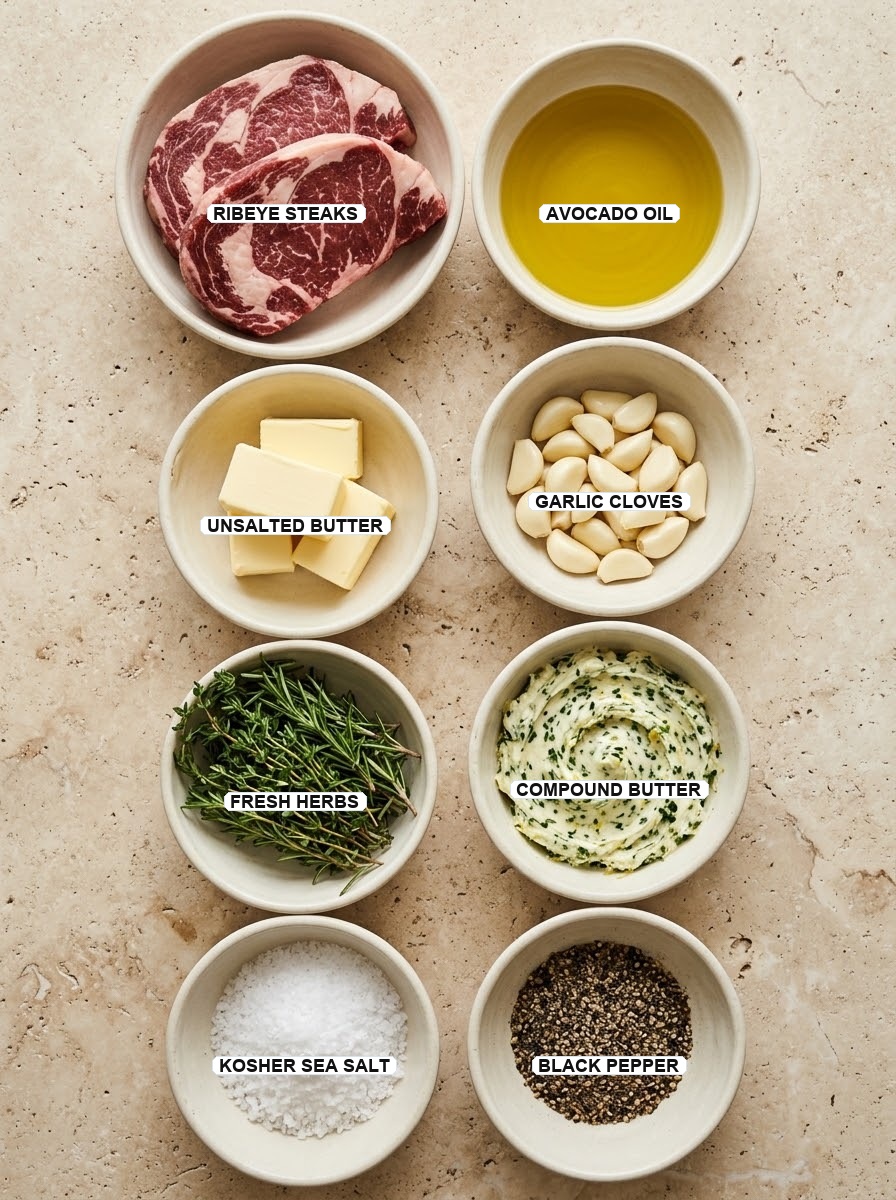
- Boneless Halal Ribeye Steaks (2 thick steaks, 12 to 14 oz / 350 to 400g each, 1 ½ inches thick): Bone-in ribeyes or New York strip steaks of the same thickness also work seamlessly.
- High-Smoke-Point Oil (1 ½ tablespoons / 22ml avocado oil or grapeseed oil): Prevents burning during the initial 450°F cast-iron sear before the butter is added.
- Coarse Kosher Salt (2 teaspoons) & Freshly Cracked Black Pepper (1 ½ teaspoons): Season generously on all sides and edges.
- For the Skillet Basting: 3 tablespoons (42g) unsalted butter, 4 whole garlic cloves (peeled and lightly smashed), 4 sprigs fresh thyme, and 2 sprigs fresh rosemary.
- For the Garlic Thyme Compound Butter: 4 tablespoons (56g) softened unsalted butter, 1 small garlic clove (grated into a paste), 1 ½ teaspoons finely chopped fresh thyme and parsley, ¼ teaspoon lemon zest, and ¼ teaspoon flaky sea salt.
Pat your ribeye steaks bone-dry with paper towels and season them generously with kosher salt either 40 minutes before cooking (at room temperature) or up to 24 hours ahead uncovered on a wire rack in the fridge. Never sear a steak 10 minutes after salting—at the 10-minute mark, salt draws beading moisture to the surface that hasn’t reabsorbed yet, which will steam the crust gray.
Step-by-Step Instructions to Sear Ribeye Steaks in Cast Iron
Step 1: Roll the Garlic Herb Compound Butter & Season the Steaks
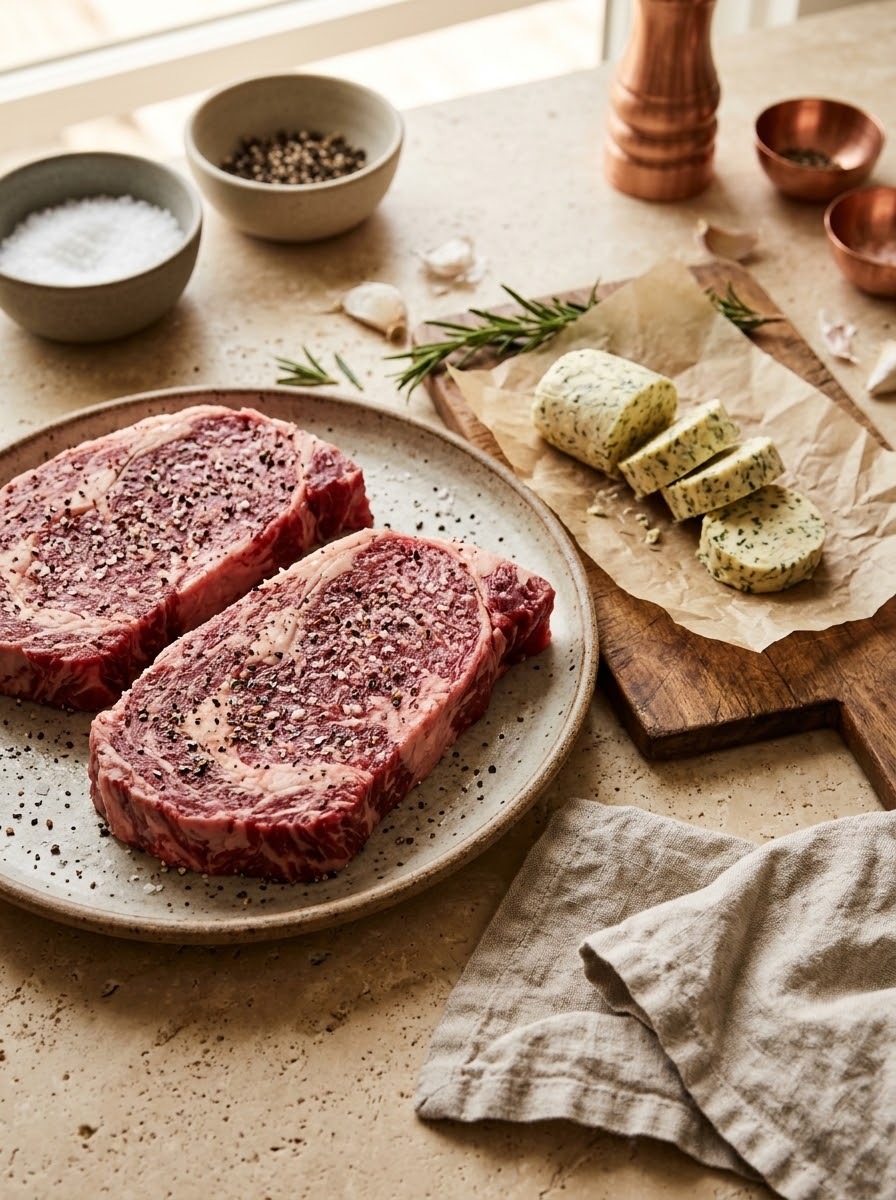
In a small bowl, mash the 4 tablespoons softened unsalted butter with the grated garlic paste, finely chopped fresh thyme, parsley, lemon zest, and flaky sea salt. Spoon onto a sheet of parchment paper, roll into a tight 1 ¼-inch cylinder, and chill in the refrigerator for 20 minutes until firm enough to slice into rounds. Meanwhile, let your ribeye steaks sit at room temperature for 30 minutes, pat completely dry, and press coarse kosher salt and cracked black pepper onto both faces and the fat rim.
Step 2: Sear Unmoved in a Smoking-Hot Cast-Iron Skillet
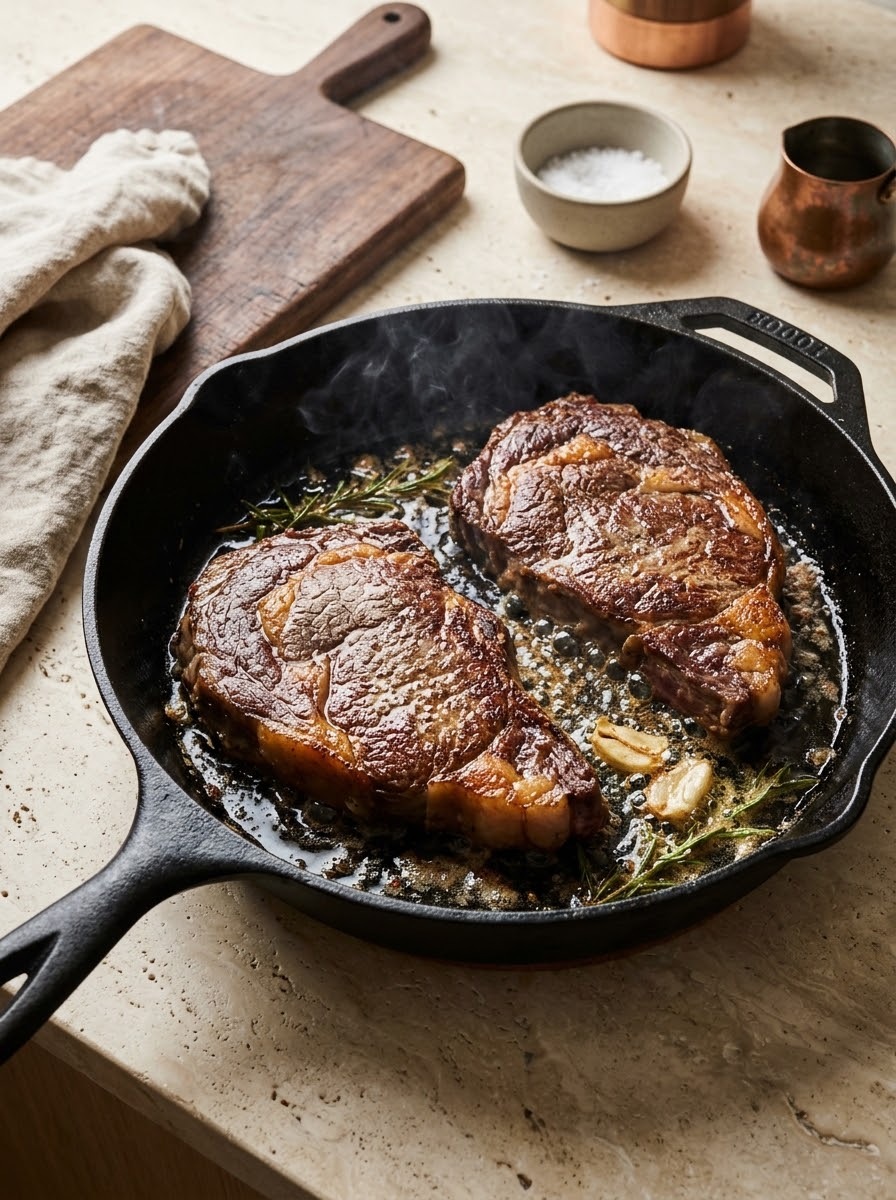
Heat a heavy 12-inch cast-iron skillet over medium-high heat for 5 full minutes until a drop of water vaporizes instantly. Swirl in the 1 ½ tablespoons avocado oil until shimmering. Using long tongs, hold both steaks upright on their outer fat caps for 45 seconds to render the edge fat, then lay the steaks flat into the pan away from you. Sear undisturbed for 3 minutes until a deep mahogany crust forms underneath.
Step 3: Flip, Add Garlic & Herbs, and Butter-Baste (Arroser)
Flip both ribeye steaks to expose the deeply browned first side. Immediately reduce the burner slightly to medium, drop the 3 tablespoons unsalted butter, smashed whole garlic cloves, fresh thyme sprigs, and rosemary sprigs into the front of the skillet. As the butter foams and turns nutty golden brown, tilt the skillet slightly by the handle and use a large metal spoon to continuously baste the hot foaming herb butter over the top of the steaks for 2 ½ to 3 minutes.
Step 4: Rest with Compound Butter Medallions & Slice
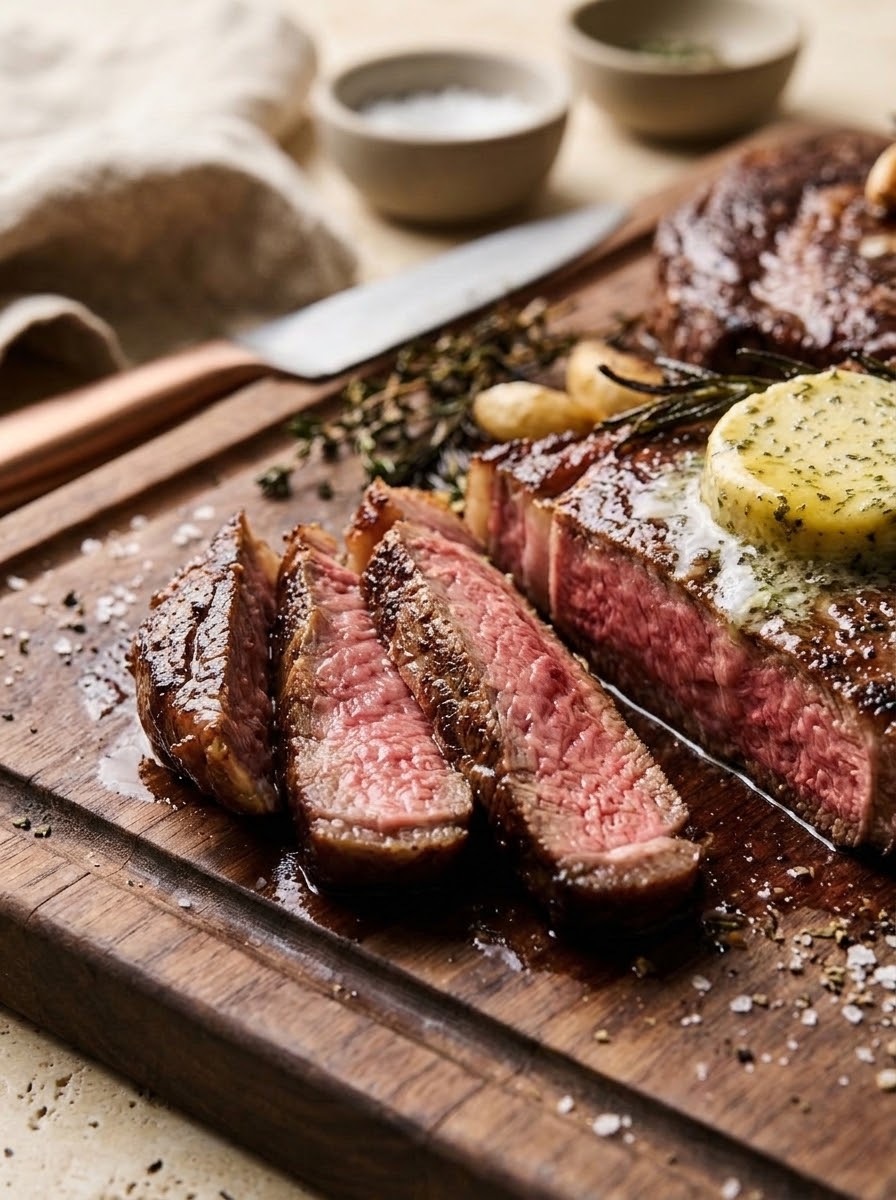
Check the internal temperature in the thickest center of each steak with an instant-read thermometer—remove the steaks from the hot skillet at 128°F to 130°F (53°C to 54°C) for a perfect medium-rare after carryover cooking. Transfer immediately to a warm wooden cutting board, place a thick coin of chilled garlic-thyme compound butter on top of each steak, and let rest uncovered for 8 minutes before slicing against the grain.
Ribeye Internal Temperature Chart (Pull vs. Final Temp)
Because cast-iron skillets transfer intense radiant heat, a thick ribeye will rise an additional 5°F (3°C) while resting on the board. Always pull your steak 5 degrees below your target doneness:
- Rare (Cool Red Center): Pull from skillet at 120°F (49°C) → Final rested temp 125°F (52°C).
- Medium-Rare (Warm Ruby Center — Chef’s Recommendation for Ribeye): Pull from skillet at 128°F–130°F (53°C–54°C) → Final rested temp 135°F (57°C).
- Medium (Warm Pink Center): Pull from skillet at 138°F–140°F (59°C–60°C) → Final rested temp 145°F (63°C).
Compound Butter Storage: Keep leftover compound butter wrapped tightly in parchment and foil in the fridge for up to 2 weeks or frozen for 3 months.
Gentle Steak Reheating: Store leftover sliced ribeye in an airtight container for up to 3 days. To reheat without turning the pink center gray, warm the slices on a wire rack in a 250°F (120°C) oven for 10 to 12 minutes just until warm (110°F), then top with a dab of garlic herb butter.
Steakhouse Compound Butter Variations
- Roasted Garlic & Blue Cheese Compound Butter: Fold 2 tablespoons crumbled aged Gorgonzola or Roquefort into the softened garlic-thyme butter before rolling.
- Black Garlic & Chive Butter: Mash 2 sweet fermented black garlic cloves and 1 tablespoon minced fresh chives into the softened butter for deep umami richness.
- Smoky Paprika & Shallot Butter: Stir 1 tablespoon finely minced sautéed shallot and ½ teaspoon smoked Spanish paprika into the herb butter.
Frequently Asked Questions
Q.Why do we start searing in avocado oil instead of putting butter directly in the hot skillet?
Whole butter contains milk solids that scorch and turn bitter at 350°F (175°C). Refined avocado oil has a 500°F (260°C) smoke point, allowing you to sear the first side at high heat without burnt butter smoke. Adding the butter after flipping cools the pan slightly so the milk solids toast to a nutty brown instead of burning.
Q.What if I don’t have a cast-iron skillet?
A heavy tri-ply stainless steel skillet (12-inch) is the best alternative. Avoid thin nonstick pans, which cannot retain enough thermal mass when two thick steaks are added and should not be heated dry to high temperatures.
Q.Should I tent my ribeye steaks with foil while resting?
Leave them uncovered on a warm wooden board! Tenting tightly with aluminum foil traps rising steam and softens the crispy crust you just built in the cast-iron pan. The melting medallion of compound butter on top keeps the steak warm and glossy.
Q.Why is medium-rare recommended specifically for ribeye?
Unlike lean filet mignon, ribeye contains rich ribbons of internal marbling that only fully soften and render into juicy flavor when the internal temperature reaches at least 130°F to 135°F (54°C to 57°C).
Recipe
Notes
- Choose Thick Steaks: Always buy ribeyes at least 1 1/4 to 1 1/2 inches thick so the exterior develops a deep sear before the center overcooks.
- Carryover Cooking: Pull the steaks from the cast-iron skillet 5°F below your target doneness (pull at 128°F–130°F for a 135°F medium-rare finish after resting).
- Do Not Tent with Foil: Leave the resting steaks uncovered so trapped steam does not soften the crispy crust.