

Bibimbap is a bowl of vibrant colors and flavors that dances on your taste buds, making every meal feel like a celebration. Picture this: a steaming bed of fluffy rice topped with an array of sautéed vegetables, a perfectly fried egg, and spicy gochujang sauce, all mingling to create a culinary masterpiece. It’s the kind of dish that makes even the most mundane weeknight feel special, inviting you to take a moment and savor every bite.
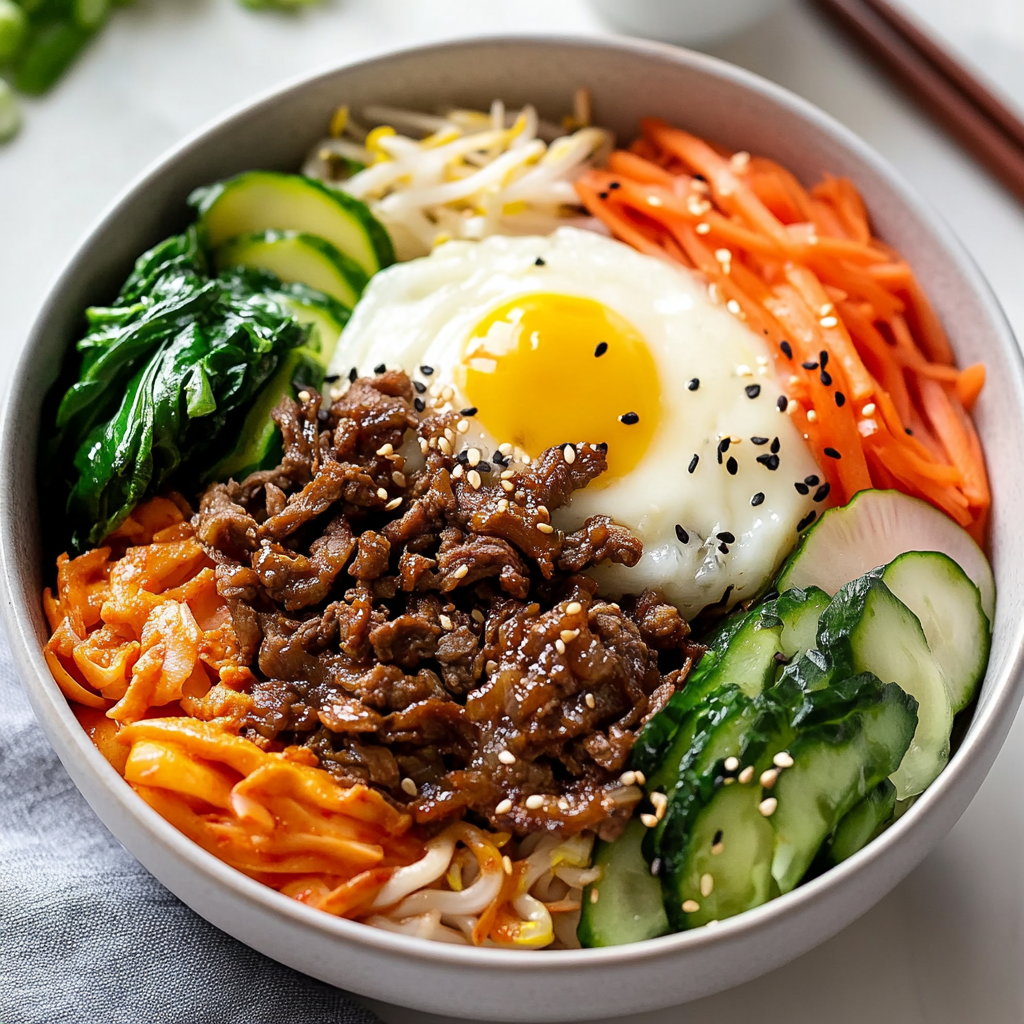
Every time I make bibimbap, it transports me back to my travels in Korea, where street vendors served this delightful dish with a smile. The aroma of sizzling veggies and spicy sauces wafting through the air was irresistible. Whether it’s a casual family dinner or an impressive feast for friends, bibimbap always brings people together for an unforgettable experience that’s as delicious as it is colorful.
Why You'll Love This Recipe
- This bibimbap recipe combines ease of preparation with incredible flavors
- You can customize it with any veggies you have on hand
- Its stunning presentation is sure to impress guests at any gathering
- Perfect for both weeknight dinners and weekend feasts, bibimbap stands out for its versatility
Sharing bibimbap with friends during game night had everyone asking for seconds—it was a hit!
Essential Ingredients
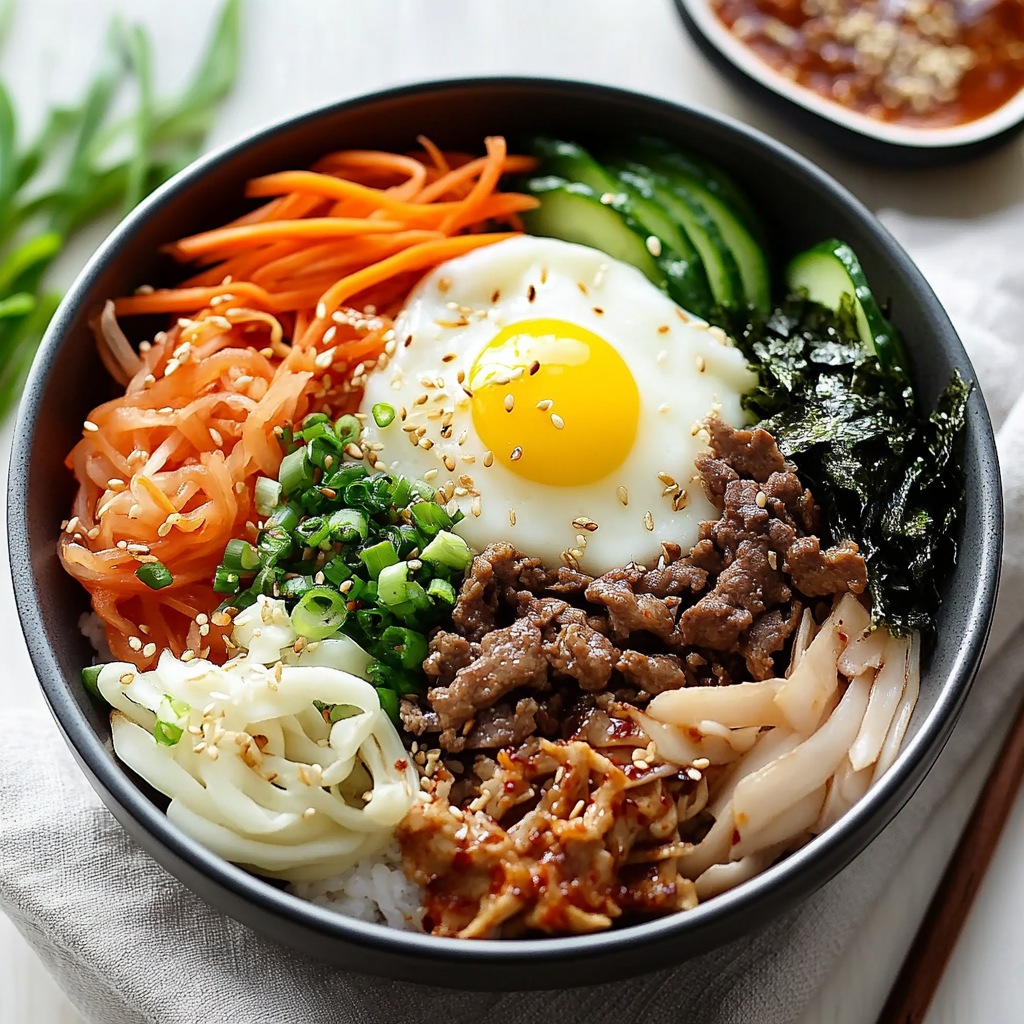
Here’s what you’ll need to make this delicious dish:
-
Short-Grain Rice: Stickier rice works best for holding all those delicious toppings together; use sushi rice if you can find it.
-
Fresh Spinach: Look for vibrant green leaves; blanching them enhances their flavor and tenderness.
-
Zucchini: Choose firm zucchinis; slice them thinly for quick cooking and maximum flavor absorption.
-
Carrots: Fresh carrots add color and crunch; julienne them for even cooking and better presentation.
-
Mushrooms: Use shiitake or button mushrooms; they add umami depth that complements the other ingredients beautifully.
-
Eggs: Fresh eggs are essential; fry them sunny-side-up for the perfect creamy yolk that ties everything together.
-
Gochujang Sauce: This spicy Korean chili paste brings heat and flavor; adjust according to your spice preference.
-
Sesame Oil: A drizzle adds rich nutty flavor; use toasted sesame oil for an extra kick.
-
Green Onions & Sesame Seeds: These are perfect garnishes that add fresh flavor and visual appeal.
The full ingredients list, including measurements, is provided in the recipe card directly below.
Let’s Make it Together
Prepare the Rice: Rinse 1 cup of short-grain rice under cold water until the water runs clear. Cook according to package instructions, ideally using a rice cooker for perfect results.
Sauté the Vegetables: Heat 1 tablespoon of sesame oil in a skillet over medium heat. Sauté julienned carrots, zucchini, and spinach separately until just tender—about 2-3 minutes each—to keep their vibrant colors.
Cook the Mushrooms: In the same skillet, add sliced mushrooms. Cook until they’re golden brown and fragrant—around 4-5 minutes—season lightly with salt.
Fry the Eggs: In another pan, heat a small amount of oil over medium-low heat. Crack in eggs and fry sunny-side up until whites are set but yolks remain runny—about 3-4 minutes.
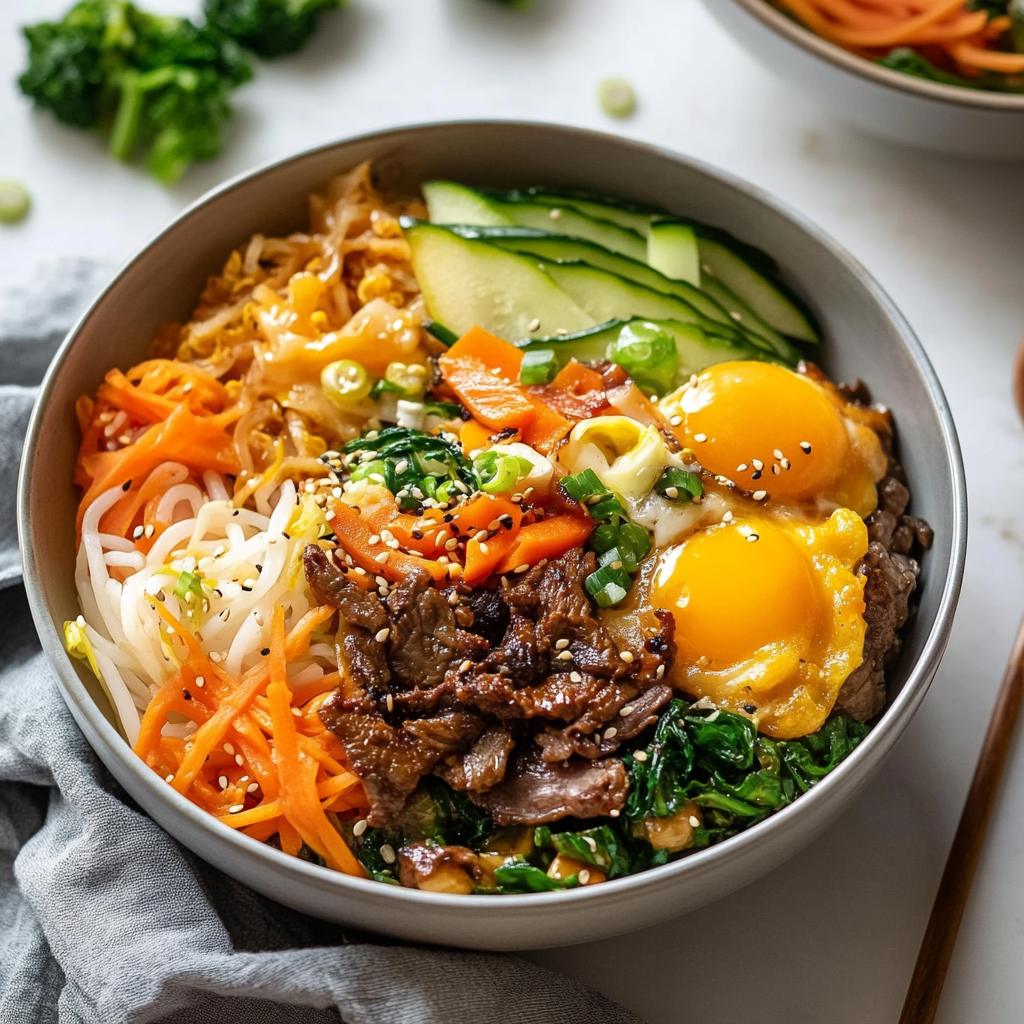
Assemble Your Bibimbap: In bowls, place cooked rice as your base. Artfully arrange sautéed vegetables on top: carrots, zucchini, spinach, mushrooms—in whatever artistic way you fancy!
Add Flavor: Top each bowl with a fried egg and drizzle generously with gochujang sauce for that spicy kick! Sprinkle with sesame seeds and chopped green onions before serving.
Now you have a stunning bibimbap ready to impress! Enjoy every colorful layer as you mix it all up—trust me; each bite is worth the wait!
You Must Know
- Bibimbap is a colorful dish, packed with flavor and nutrients
- Its vibrant presentation makes it perfect for impressing guests
- Plus, it’s incredibly versatile, allowing you to use whatever veggies or proteins you have on hand for a personalized touch
Perfecting the Cooking Process
Start by preparing all your ingredients first; cook protein after veggies. This helps maintain textures and flavors.
Add Your Touch
Feel free to swap veggies or add extra spices like gochujang for heat. Personalize it to your taste.
Storing & Reheating
Store leftovers in an airtight container in the fridge for up to three days. Reheat gently in a skillet.
Chef's Helpful Tips
- To achieve the perfect bibimbap, always use fresh vegetables for crunch and color
- When cooking rice, rinse until water runs clear for fluffiness
- Don’t forget to serve with a fried egg on top for that authentic touch!
Sharing this delightful bibimbap recipe always brings smiles at gatherings, with friends delighting in its vibrant colors and tasty combinations.
FAQ
What is bibimbap?
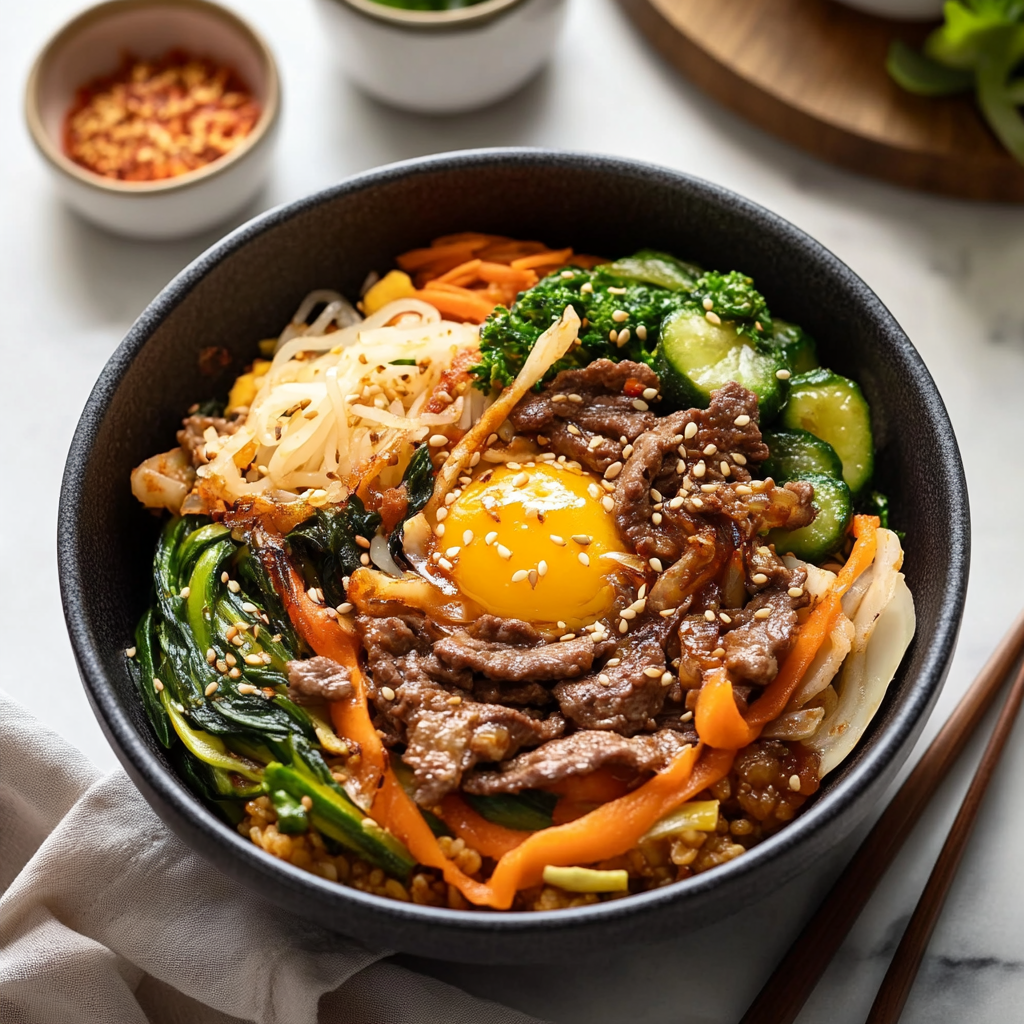
Bibimbap is a Korean rice dish topped with assorted vegetables, meat, and a fried egg.
Can I make bibimbap vegetarian?
Absolutely! Just skip the meat and add more vegetables or tofu for protein.
What sauce goes with bibimbap?
Gochujang sauce is the classic choice; it adds spice and depth of flavor to your bibimbap.
Bibimbap
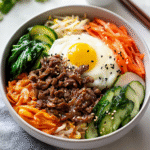
Bibimbap is a vibrant Korean dish that combines fluffy short-grain rice, sautéed vegetables, and a sunny-side-up egg, all topped with spicy gochujang sauce. This colorful bowl not only delights your taste buds but also serves as a canvas for creativity in the kitchen. Perfect for weeknight dinners or special gatherings, bibimbap invites you to mix and match ingredients for a personalized culinary experience that’s both delicious and visually stunning.
- Prep Time: 15 minutes
- Cook Time: 20 minutes
- Total Time: 35 minutes
- Yield: Serves 2
- Category: Main
- Method: Sautéing
- Cuisine: Korean
Ingredients
- 1 cup short-grain rice
- 1 cup fresh spinach
- 1 medium zucchini, thinly sliced
- 1 medium carrot, julienned
- 1 cup mushrooms (shiitake or button), sliced
- 2 large eggs
- 3 tablespoons gochujang sauce (adjust for spice)
- 1 tablespoon sesame oil
- 2 green onions, chopped
- 1 tablespoon sesame seeds
Instructions
- Rinse the rice under cold water until the water runs clear. Cook the rice according to package instructions.
- In a skillet, heat sesame oil over medium heat. Sauté carrots, zucchini, and spinach separately until just tender (about 2-3 minutes each).
- Add sliced mushrooms to the skillet and cook until golden brown (around 4-5 minutes). Season lightly with salt.
- In another pan, fry eggs sunny-side up until whites are set but yolks remain runny (about 3-4 minutes).
- Assemble bowls by placing cooked rice as the base. Artfully arrange sautéed vegetables on top and add a fried egg.
- Drizzle with gochujang sauce and sprinkle with sesame seeds and green onions before serving.
Nutrition
- Serving Size: 1 bowl (approximately 400g)
- Calories: 540
- Sugar: 4g
- Sodium: 620mg
- Fat: 18g
- Saturated Fat: 3g
- Unsaturated Fat: 15g
- Trans Fat: 0g
- Carbohydrates: 78g
- Fiber: 4g
- Protein: 16g
- Cholesterol: 186mg
Leave a Comment